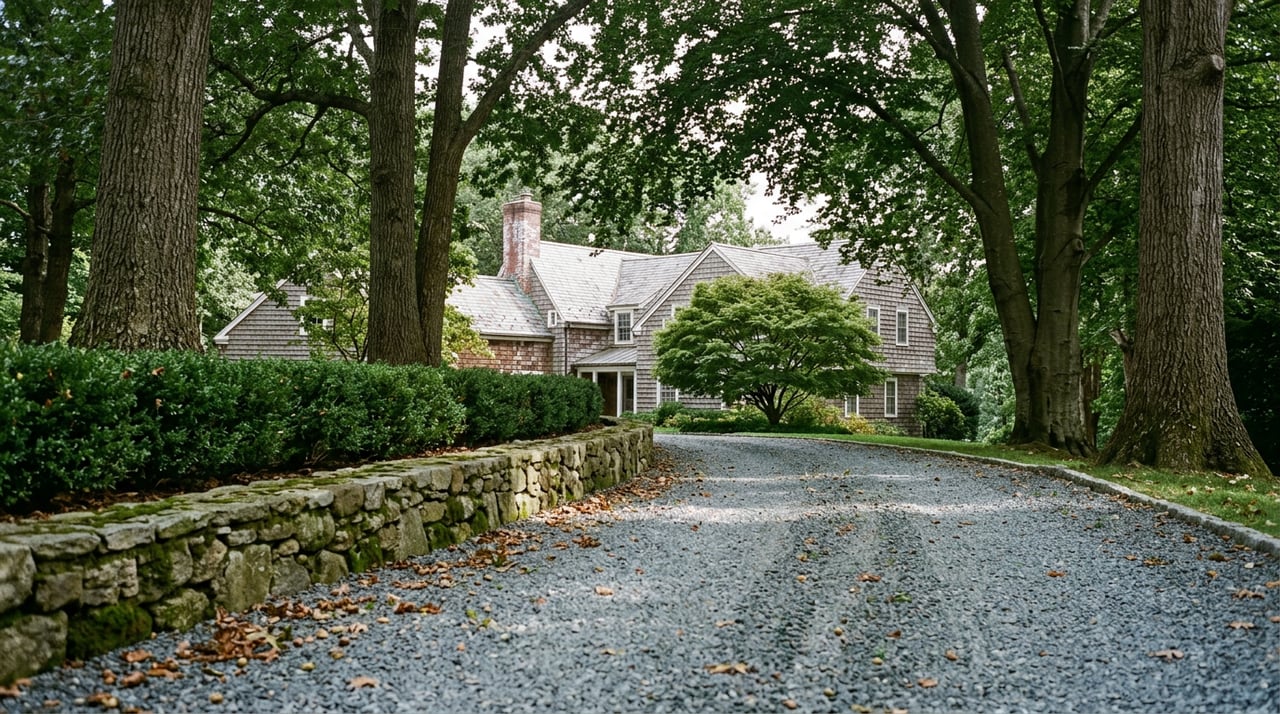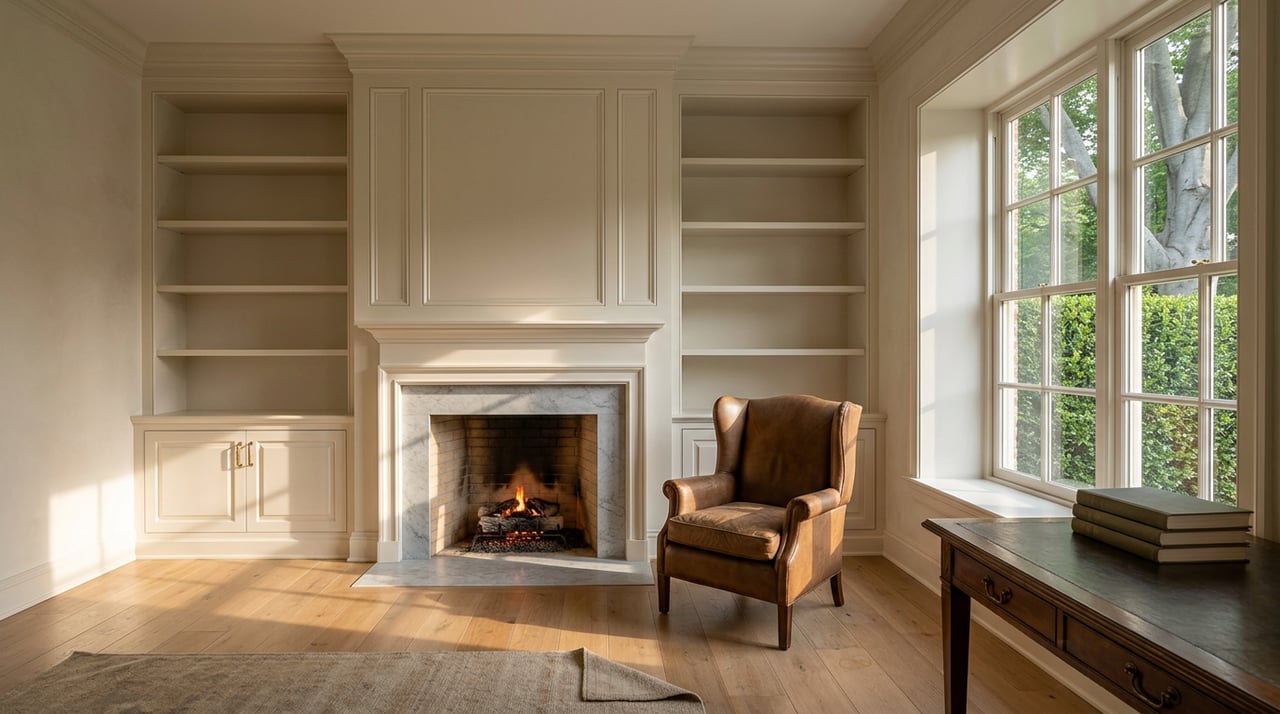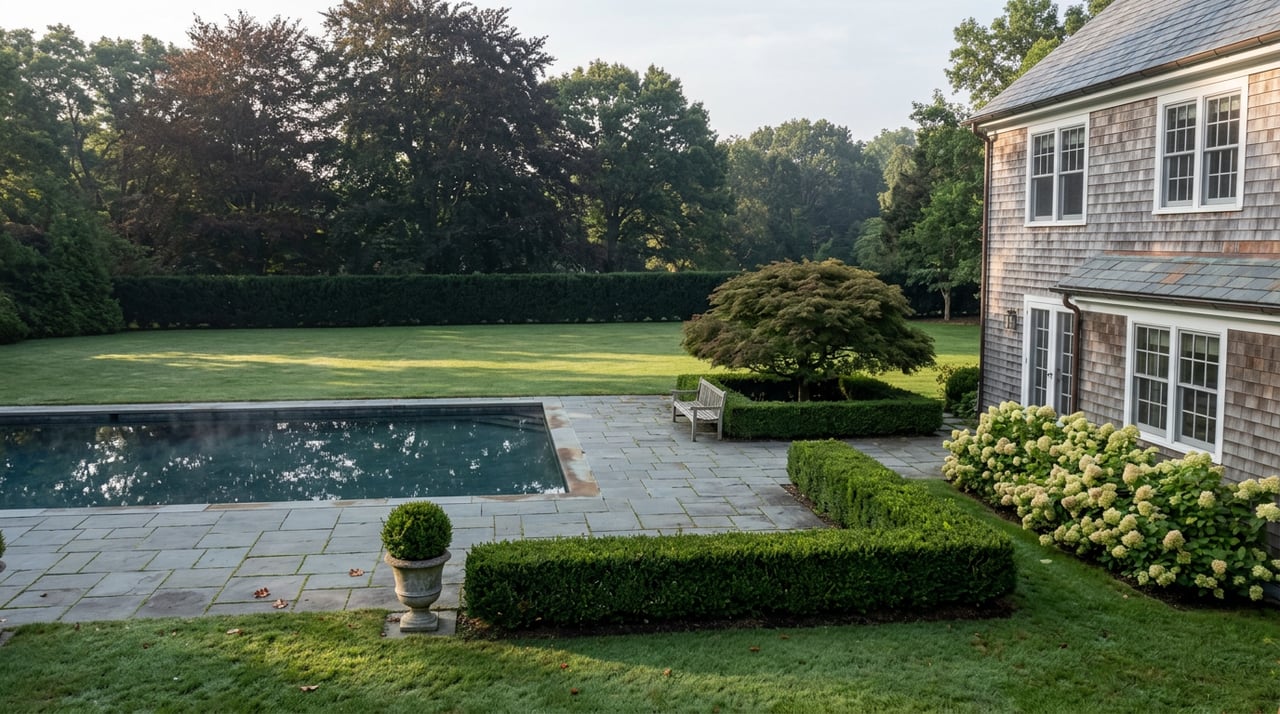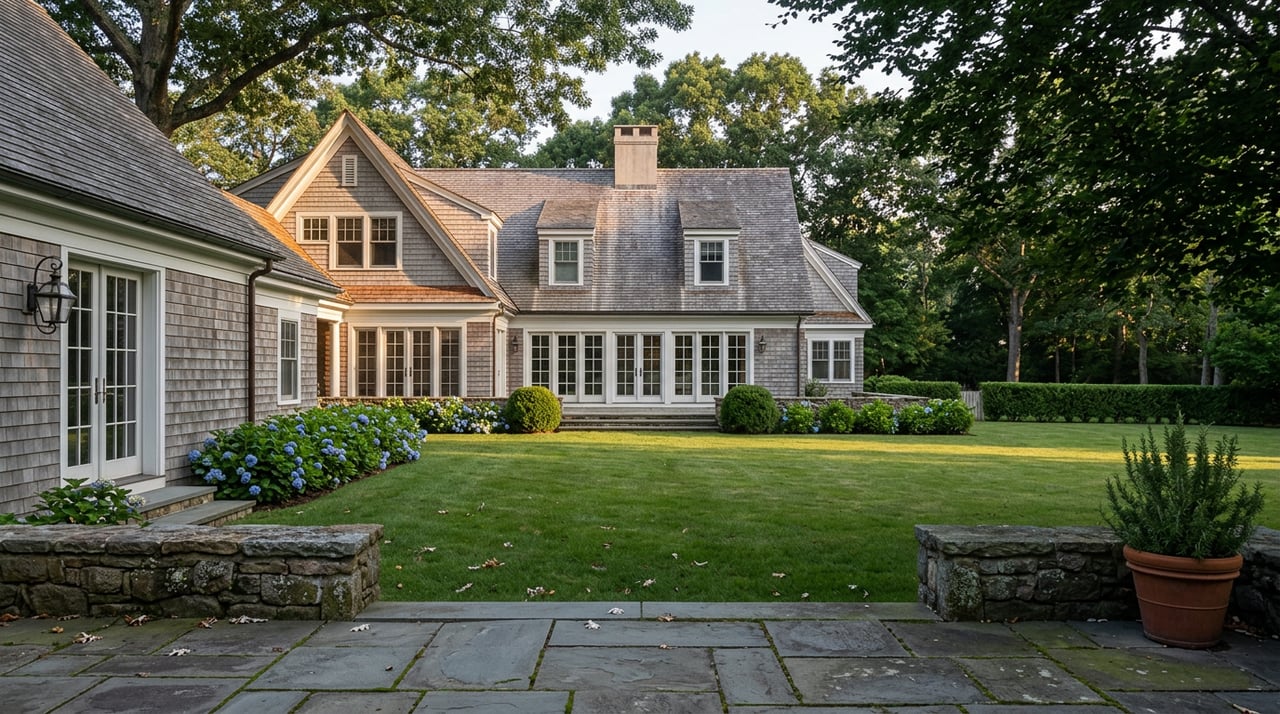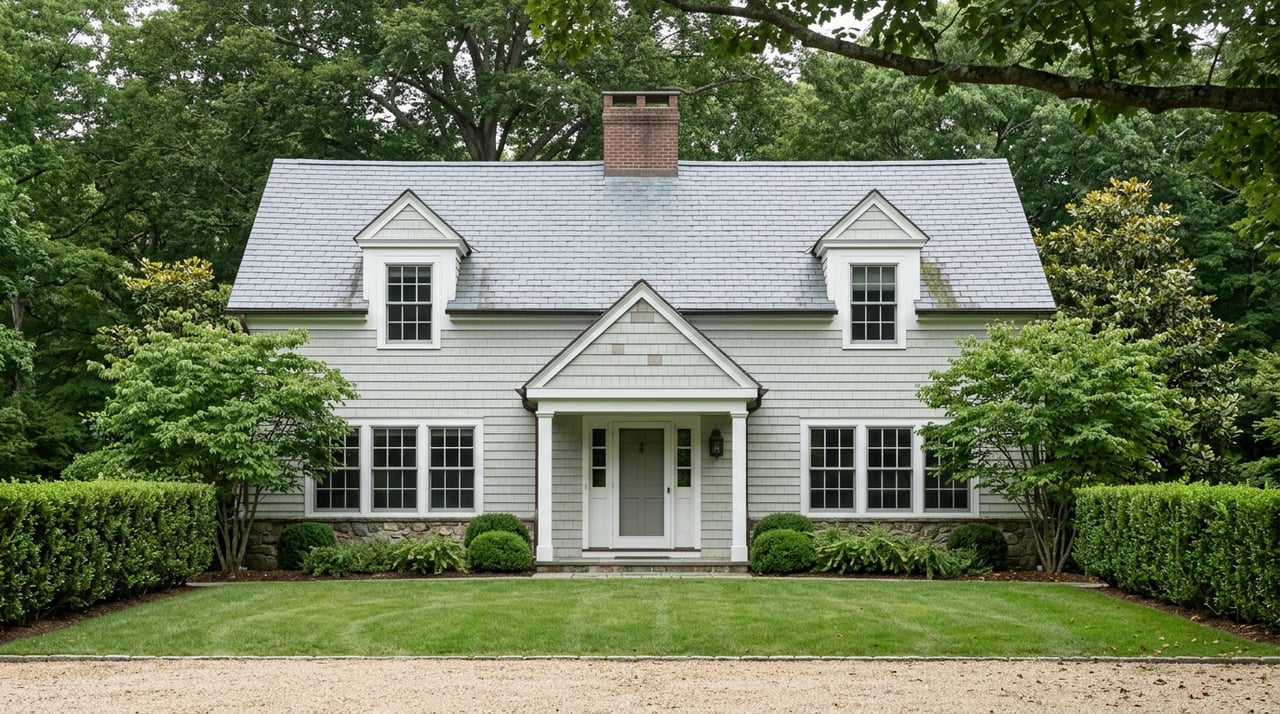
Three years. A $14 million price cut. And in the end, one estate becoming four separate transactions instead of one signature closing.
That is the real story behind the sale everyone on Long Island's North Shore has already heard about: Billy Joel's MiddleSea compound on Centre Island, first listed at $49 million in 2023 after a five year renovation, pulled from the market for more renovations, relisted in 2024 at $49.9 million, and finally sold in pieces beginning in early 2025 through February 2026. The final tally across the gatehouse, the main house, and two adjoining lots came to $35.75 million, which every outlet covering it correctly called the most expensive residential sale on Long Island outside the Hamptons. What gets less attention is what that number is actually made of, and what it tells anyone comparing Centre Island to other Gold Coast villages about how pricing really works on a 605 acre peninsula with roughly 200 households and one road in.
The Average That One House Moved
Nassau County's average single family sale price hit $1,107,000 in the first quarter of 2026, according to an analysis cited by The Real Deal. That figure moved largely because of this single closing. In a county with thousands of transactions a year, one sale should not be able to shift the countywide average in any meaningful way. On Centre Island specifically, it can, because the village trades so infrequently and at such extremes that a handful of estate level closings can swing whatever aggregate number gets reported that quarter.
This is worth sitting with if you have been comparing "average sale price" or "median price" across North Shore villages the way you might compare them for a subdivision in a larger town. Centre Island's incorporated village government confirms the reason why: just under 200 households sit on a 605 acre peninsula reachable by a single access road, established as its own municipality in 1926. A market that small does not generate a stable average. It generates a headline every time a large estate changes hands, and that headline gets treated as if it describes the whole village, when it usually describes one transaction.
Four Deals, Not One
The MiddleSea sale is a clean illustration of how estate level compounds here actually trade. Joel had assembled the property over more than two decades, buying the core parcel in 2002 for $22.5 million and adding adjoining lots as they became available, according to Robb Report's coverage of the closing. That detail matters more than it first appears. A "26 acre compound" advertised as one listing was, underneath the marketing, always a set of separately deeded properties. When no single buyer wanted the whole assemblage at once, the compound could revert to what it had been all along.
| Piece | Status | Price |
|---|---|---|
| Whole compound, first list (2023) | Listed | $49 million |
| Whole compound, relisted after further renovation (2024) | Listed | $49.9 million |
| Gatehouse, 7 bed / 9 bath | Sold, 2025 | $7 million |
| Main house, 5 bed / 11 bath, roughly 20,000 sq ft | Sold, February 2026 | just over $23.2 million |
| Two adjoining waterfront lots | Sold, February 2026 | $2.75 million each |
| Total realized across all four pieces | $35.75 million |
The gap between the $49.9 million relist price and the $35.75 million actually realized is close to $14 million, a figure both Robb Report and the Irish Times' coverage of the sale confirm independently. That gap is not a story about the property losing value. It is a story about what happens when a seller waits for one buyer to want everything, instead of pricing each piece for the buyer who actually wants it.
The Carrying Cost Nobody Puts on a Brochure
The Irish Times' reporting on the sale surfaced a number that explains a large part of why the whole compound sat unsold for so long: the annual property tax bill on MiddleSea had climbed past $567,000, close to one and a half times the median price of an entire home in the United States. Emmett Laffey, the broker who represented Joel in the sale, put it plainly to the paper: "the tax was a big number, because the value was a big number."
That line is worth remembering for anyone evaluating a Centre Island property against its asking price alone. At this altitude of the market, the tax bill is not a footnote. It is a filter that narrows the buyer pool before a single showing happens, and it can keep an otherwise qualified buyer from ever making an offer on the whole assemblage, even when they could comfortably afford the purchase price.
What Actually Shrank Between Listing and Sale
By the time the main house closed, it was no longer part of a 26 acre compound. The gatehouse and the two waterfront lots had already been carved off and sold separately, which means the parcel a buyer ultimately purchased for just over $23.2 million was smaller and more contained than the one originally marketed at $49.9 million. Different sources describe the remaining footprint differently, somewhere between 14 and 21 acres depending on which structures and rights are counted, and that inconsistency is itself informative: once a compound gets unbundled, "the property" stops being a single fixed thing and becomes whatever collection of parcels a given buyer actually wants.
That is the mechanism worth taking from this sale, more than the record headline. A gatehouse buyer wanted a smaller, self contained home, not a 26 acre commitment. Lot buyers wanted raw waterfront to build on, not an existing 20,000 square foot house. The eventual main house buyer wanted the core estate, not the extra parcels Joel had added on over the years. Pricing the whole thing as one number meant pricing it for a buyer who wanted all four things at once, and on a peninsula with 200 households, that buyer is rare enough that waiting for one to appear cost three years and roughly $14 million.
What This Means If You're Pricing Something Here
If you own, or are considering buying, an estate level property on Centre Island, the lesson is not that record sales inflate the market. It is that the countywide averages and medians reported after a sale like this one describe the sale, not the village. Two properties with the same acreage and the same water frontage on Centre Island can carry very different practical values depending on whether they are structured as one deed or several, and whether the tax burden matches the buyer pool the listing is actually reaching.
This is where a senior, hands on advisor earns their fee at this level of the market. Pricing a Centre Island estate well means understanding which buyers exist for the whole compound versus the individual pieces, and being honest early about carrying costs that will eventually shape every serious offer. It is not a spreadsheet exercise. It is local judgment built from watching how these specific transactions actually close, not how the headlines describe them afterward.
A Few Questions Worth Asking Before You Price Anything on the Peninsula
Does a sale like this mean Centre Island values are rising or falling? Neither, on its own. One sale at this scale tells you about that specific compound and that specific buyer pool. It does not describe trend direction for the village, because the village does not generate enough transactions in a given quarter to establish a trend.
How often does a sale like this happen on Centre Island? Rarely, which is exactly the point. With roughly 200 households on the peninsula, estate level closings are infrequent enough that any single one can dominate whatever countywide statistic gets published that quarter.
If average and median price are unreliable here, what should I actually look at? The specific parcel structure, the tax history, and recent comparable closings within the village itself, not the county. A conversation with someone who tracks these transactions directly will tell you more than any aggregate number pulled from a quarterly report.
Every estate on this peninsula carries its own history, its own deed structure, and its own carrying costs, and none of that shows up in a countywide average. If you are weighing a purchase or a sale on Centre Island and want a read on what a specific property is actually worth in today's market, Cottie Maxwell offers a private consultation grounded in the transactions that actually happened here, not the headline that followed one of them.